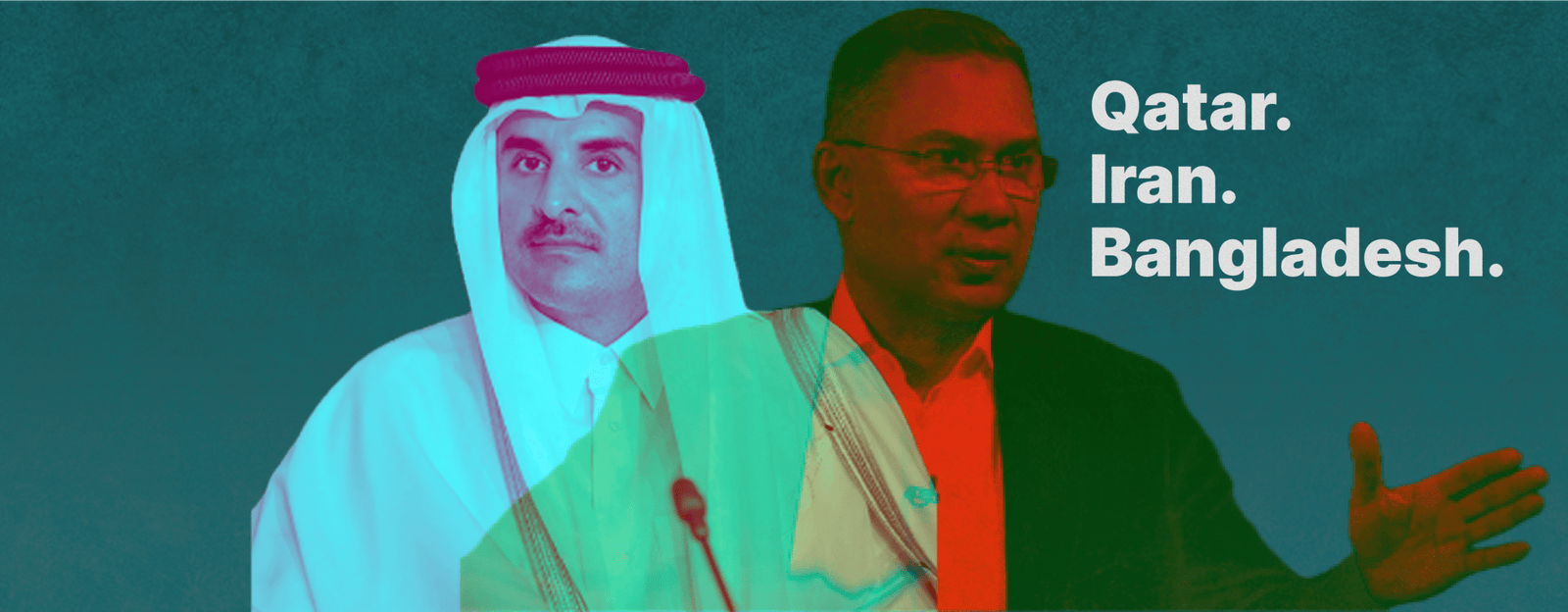

The Strait of Hormuz traffic was effectively halted after the war that began 28 February 2026, and the disruption rapidly translated into a material LNG supply loss from Qatar and the UAE (the IEA quantifies the LNG impact since 1 March).
Second, missile attacks on Ras Laffan Industrial City damaged LNG and gas-to-liquids facilities. In public remarks reported by major outlets, Saad al-Kaabi described damage that knocked out two LNG trains and one GTL train, with an estimated 17% of export capacity affected and a repair horizon measured in years, not weeks.
Against that backdrop, the contractual consequences became visible in multiple layers:
- QatarEnergy halted LNG production and declared force majeure on LNG shipments earlier in March, citing the inability to export via the Strait and the operational reality of shutting liquefaction when ships cannot move reliably.
- QatarEnergy later reported that it had determined the need to declare force majeure on some long‑term LNG supply contracts, with customers in Italy, Belgium, South Korea, and China cited among those impacted (Reuters also clarified at least one headline that initially overstated the immediacy/formality of the declaration on those contracts).
- The disruption propagated through portfolio sellers and downstream contracts: for example Orlen was reported to have received a force majeure note warning that two LNG cargoes (April / early May) could be delayed or cancelled, even while expressing confidence in its own supply security due to diversification.
For Bangladesh specifically, the key point is that Bangladesh appears to be affected through both (i) direct long‑term supply exposure and (ii) indirect knock‑ons from Qatar‑sourced supply chains:
- Bangladesh’s LNG procurement is managed by Petrobangla and its importing entity Rupantarita Prakritik Gas Company Limited.
- Bangladesh media Boinik Barta reporting cites senior officials saying force majeure was communicated as applying (at least initially) through mid‑April for Bangladesh‑bound cargoes, with deliveries suspended and uncertainty about whether any longer multi‑year force majeure period would be applied to Bangladesh’s contract set.
- Separate reporting indicates Bangladesh risked losing multiple April cargoes—because once QatarEnergy invoked force majeure, other suppliers closely linked to Qatar‑origin loading also invoked force majeure, creating a cascading cancellation risk across long‑term and some short‑term deliveries.
“Bangladesh is included” is materially true in the sense that Bangladesh has been facing force‑majeure‑linked delivery disruption, even if Bangladesh is not always listed in the same “named counterparties” set as some of the European and East Asian long‑term customers.
What “force majeure” means here
In LNG trade, force majeure is a standard contract clause that lets a seller (or sometimes a buyer) pause or delay contractual obligations when extraordinary events outside its control make performance impossible or unsafe—war, attacks on infrastructure, state action closing a chokepoint, and similar “beyond control” events. Reuters’ LNG reporting describes it in exactly this pragmatic way: a notice used for events outside a company’s control that usually releases it from contractual obligation without penalty during the force majeure period.
What it means operationally for a buyer:
- You may simply not get the cargo on the contracted schedule (delayed, rescheduled, or cancelled) even if you have a long‑term agreement.
- You typically must replace the missing volumes elsewhere (spot market, alternative long‑term partners, demand cuts), often at much higher prices in the middle of a crisis.
- The “pain” is not only price. It is also timing, shipping availability, insurance, and credit—especially for countries that run tight foreign‑exchange buffers and have limited financial room to outbid richer buyers.
For Bangladesh, this is why the situation feels contradictory: a long‑term contract is meant to reduce volatility, but force majeure is the contractual mechanism that allows that stability to be suspended precisely when the system is under geopolitical stress.
Geopolitical drivers and why this is not a simple “retaliation vs US alignment” story
Qatari LNG is extremely “geography‑bound.” Qatar’s LNG export system is concentrated at Ras Laffan and all cargoes must exit via the Strait of Hormuz, a chokepoint Iran can disrupt or condition.
Three facts are especially important:
- The IEA reports that in 2025 over 110 bcm of LNG transited the Strait of Hormuz, and about 93% of Qatar’s LNG exports (and 96% of the UAE’s) went through it—with no alternative routes to bring those LNG volumes to market.
- The EIA estimates that in 2024 about 20% of global LNG trade transited Hormuz, primarily from Qatar.
- Reuters reports that Ras Laffan processes and exports around 20% of global LNG supply, and it also notes Qatar shares gas fields with Iran, with relations described as having been amicable until the current war period—so Qatar is not naturally “aligned” in a way that would make self‑inflicted disruption rational.
Put bluntly: QatarEnergy cannot ship LNG if the Strait is effectively closed, and it cannot ship full volumes if export capacity is physically damaged.
Bangladesh’s dependence: the “70% from QatarEnergy” and what the numbers actually imply
A clearer “70%‑ish” statistic appears in independent analytics. An IEEFA briefing note using Kpler data states that Qatar and the UAE together supply 72% of Bangladesh’s LNG imports.
This does not necessarily mean “72% is bought directly from QatarEnergy.” It means Bangladesh’s LNG balance is heavily conditioned by the Gulf’s export reliability and Hormuz access.
Share of Bangladesh’s long‑term contracted LNG cargoes scheduled from Qatar
Prothom Alo reports Bangladesh’s plan for the current fiscal year: 115 cargoes, with 56 under long‑term contracts including 40 supplied by Qatar, and 59 from the spot market; it also notes that Oman provides LNG “purchased from Qatar.”
If you look only at the long‑term contracted cargo count in that plan (40 Qatar + the Oman tranche), Qatar’s share is very high (roughly 70% of long‑term cargoes by simple ratio), which is likely where “70%” come from.
Immediate crisis effects in Bangladesh
When Qatar‑linked deliveries became uncertain, Bangladesh moved to spot cargoes—at sharply higher prices. Reuters reports two spot purchases for March at $28.28/mmBtu and $23.08/mmBtu, versus roughly $10/mmBtu in January.
The government response included gas rationing and the shutdown of four fertiliser plants to prioritise critical supply needs.
Bangladesh government actions: what they intend to do and how they are handling it
Bangladesh’s response (as reflected in reported government decisions and procurement actions) is best understood as a three‑track strategy: replace near‑term volumes (spot + emergency procurement), stabilise financing, and build buffers in refined fuels while re‑anchoring longer‑term LNG contracting.
Replacing missing LNG volumes: spot procurement and emergency contracting
A Cabinet procurement decision reported by Dhaka Tribune approved three spot LNG cargoes for early April, including one from TotalEnergies Gas & Power Ltd priced at $21.58/mmBtu and two from POSCO International Corporation at $20.76/mmBtu each.
Stabilising financing and avoiding a domestic price shock
Reuters reports Bangladesh seeking billions in external financing for fuel and LNG imports, with Rashed Al Mahmud Titumir describing discussions with major multilateral lenders and the intent to keep energy financing uninterrupted while diversifying sources.
The new government led by Tarique Rahman is described as prioritising macro‑stability, including not passing rising global fuel costs straight through to consumers (which implies larger subsidy/fiscal pressure during the shock).
The “increase imports by 25%” point
Iqbal Hassan Mahmood said fuel imports (oil products) are to be raised by 25% as a precaution against supply route disruption.
This distinction matters because refined fuels can sometimes be re‑routed or sourced from multiple hubs more flexibly than LNG during a crunch.
Bangladesh thought increases were feasible but the war breaks that logic. Before the war shock, Bangladesh’s strategy was to increase long‑term LNG volumes from 2026, reducing reliance on expensive—and sometimes unavailable—spot cargoes.
But the ongoing crisis undermines that logic in two ways:
- Force majeure can suspend even long‑term deliveries (exactly what Bangladesh is experiencing in April scheduling).
- Even if the Strait partially reopens, physical damage and repair timelines at Ras Laffan imply reduced availability for a prolonged period in at least some parts of Qatar’s system.
Iran, the Strait of Hormuz, and the “Bangladesh safe passage” question
Bangladesh has tried to manage the chokepoint risk via diplomacy. The government requested Iran to allow Bangladeshi oil tankers to pass, and Iran’s ambassador in Dhaka, Jalil Rahimi Jahanabadi, publicly said Iran stood ready to ensure safe passage for Bangladeshi tankers.
This sits alongside a broader Iranian posture reported by Reuters: Iran told the UN Security Council and International Maritime Organization that “non‑hostile vessels” may transit if they coordinate with Iranian authorities, while excluding US/Israeli‑linked assets from qualifying passage.
Two implications follow for Bangladesh:
- Even a “safe passage” signal does not eliminate cost and delay. Bangladesh’s energy minister was reported describing that ships require special permissions and that normal movement is disrupted—conditions that raise shipping/insurance friction and add to landed costs.
- Safe passage for “Bangladeshi oil tankers” is not the same as assuring LNG cargo flow from Qatar. LNG cargoes are typically moved on specialised LNG carriers that are not necessarily Bangladesh‑flagged; and more importantly, the IEA stresses there are no alternative routes for the bulk of Qatar/UAE LNG that normally exits via Hormuz. So any Iranian “permissioning” approach still leaves Bangladesh exposed to discretionary control at the chokepoint—plus exposure to Qatar’s reduced operational capacity if damage is binding.
Bangladesh’s government has been pragmatic in crisis management (spot procurement, rationing, seeking external financing, fuel import buffers), but Bangladesh as a state has been strategically over‑exposed to a supply chain whose critical risks it cannot hedge with domestic instruments. That is not “dumb” policymaking so much as a harsh constraint of being a price‑taker with limited infrastructure and limited fiscal headroom.
